What is Artificial Intelligence (AI)? How You Can Use AI in Daily Life – Complete Guide 2026

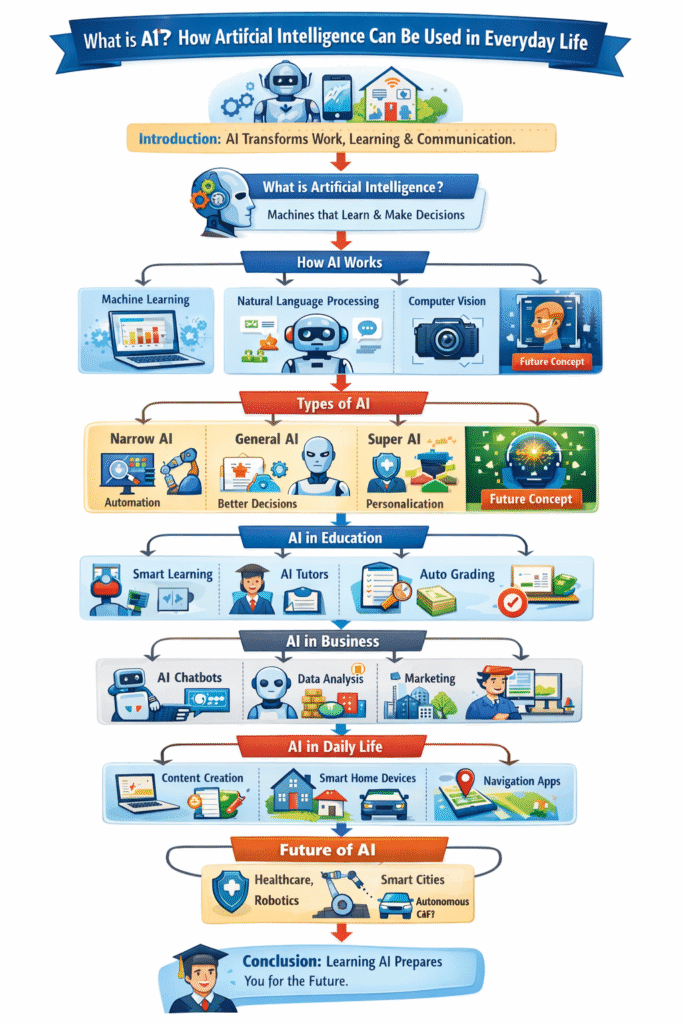
What is AI? How Artificial Intelligence Can Be Used in Everyday Life
Artificial Intelligence (AI) has become one of the most influential technologies in today’s digital era. It is rapidly changing the way people communicate, work, learn, and access information. From smartphones and online services to smart homes and automated systems, AI plays an important role in many aspects of modern life.
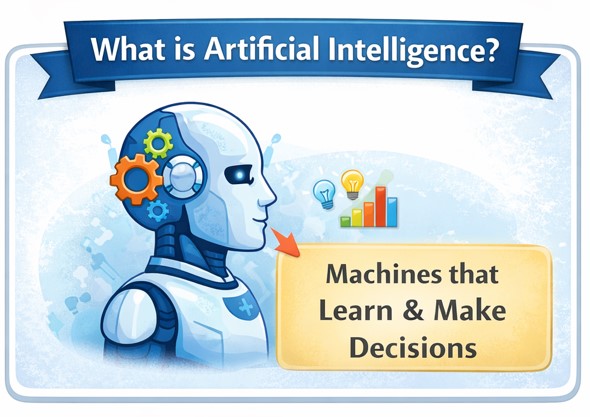
In simple terms, Artificial Intelligence refers to computer systems that are designed to perform tasks that normally require human intelligence. These tasks include learning from information, solving problems, understanding language, recognizing patterns, and making decisions.
AI is now used in various fields such as education, healthcare, finance, entertainment, marketing, and business. As technology continues to evolve, understanding AI and learning how to use it effectively can create valuable opportunities for students, professionals, and organizations.
This guide explains what Artificial Intelligence is, how it works, and how it can be applied in daily life.
Understanding Artificial Intelligence
Artificial Intelligence is a field within computer science that focuses on building machines capable of performing intelligent tasks. Instead of simply following fixed instructions, AI systems analyze data, identify patterns, and improve their performance over time.
These systems can process large amounts of information and use it to make predictions, recommendations, or decisions.
For example:
- Voice assistants such as Siri or Alexa respond to spoken commands.
- Streaming platforms suggest movies or shows based on viewing habits.
- Customer service chatbots provide instant responses to user queries.
AI systems learn by analyzing large datasets and using algorithms that help them recognize patterns and improve accuracy.
How Artificial Intelligence Works
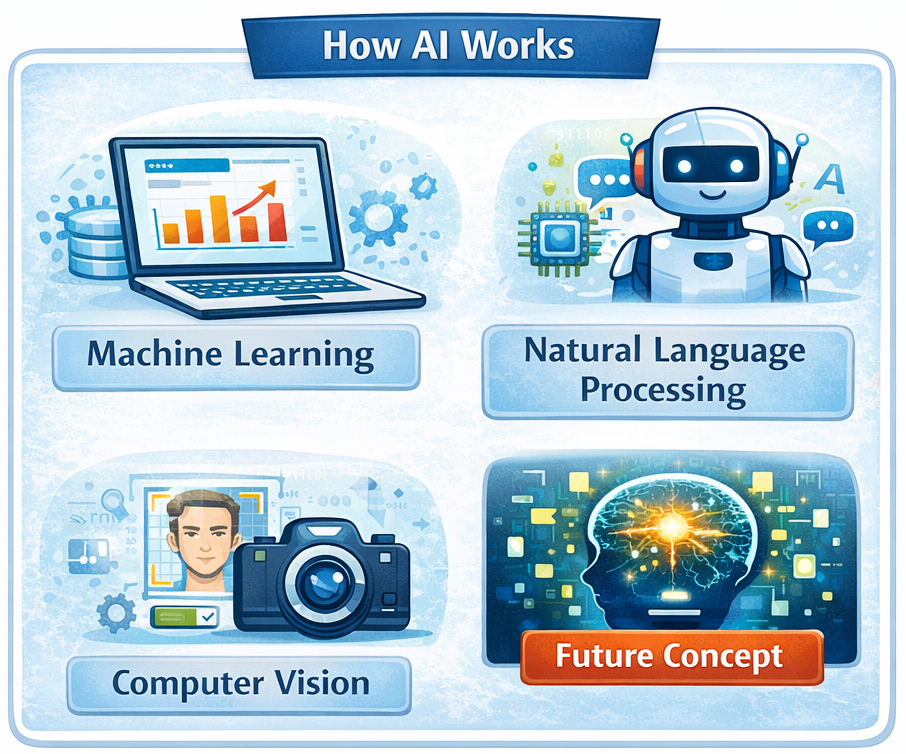
AI operates through several advanced technologies that enable machines to process data and make intelligent decisions.
Machine Learning
Machine Learning is a key component of AI. It allows computers to learn from data and improve their performance without being explicitly programmed for every task.
For example, email services use machine learning to detect and filter spam messages automatically.
Natural Language Processing (NLP)
Natural Language Processing enables computers to understand and interact using human language.
This technology is widely used in:
- Virtual assistants
- Chatbots
- Language translation tools
- Voice recognition systems
Computer Vision
Computer Vision allows machines to interpret and analyze visual information such as images and videos.
Examples include:
- Facial recognition systems
- Self-driving vehicle technology
- Medical image analysis used by doctors
Types of Artificial Intelligence
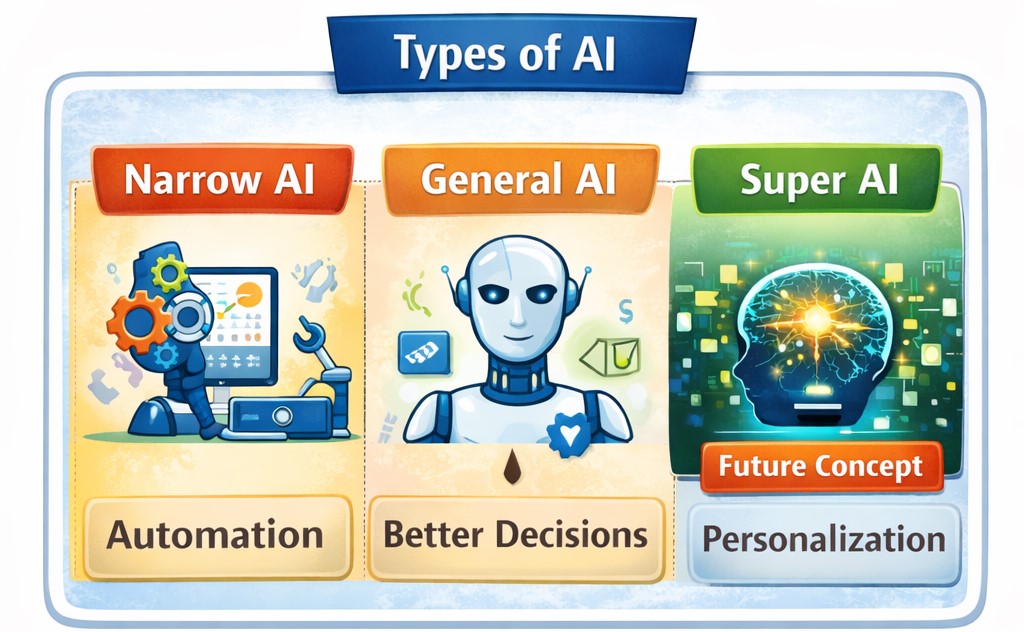
Artificial Intelligence can generally be categorized into three main types.
Narrow AI
Narrow AI is designed to perform specific tasks. Most AI applications available today fall into this category.
Examples include:
- Search engines
- Voice assistants
- Recommendation systems used by online platforms
General AI
General AI refers to machines that could perform any intellectual task that humans can do. This concept is still theoretical and under research.
Super AI
Super AI describes a hypothetical form of intelligence that would surpass human capabilities. While widely discussed in research and science fiction, it has not yet been developed.
Advantages of Artificial Intelligence
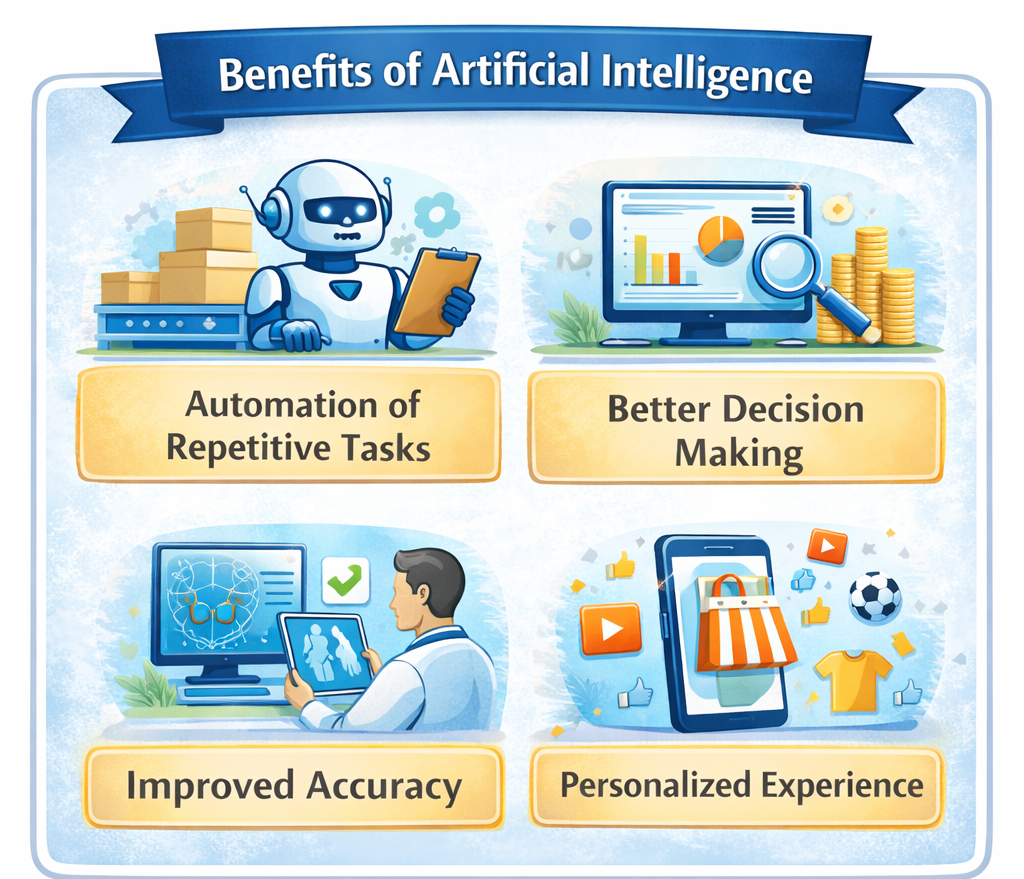
Artificial Intelligence offers many benefits across different industries and applications.
Automation of Routine Tasks
AI can automate repetitive and time-consuming activities, allowing people to focus on more complex work.
Improved Decision Making
By analyzing large volumes of data quickly, AI helps businesses and organizations make more informed decisions.
Higher Accuracy
AI systems reduce the likelihood of human errors and improve precision in areas like financial analysis and medical diagnosis.
Personalized Experiences
AI can analyze user behavior and preferences to recommend products, services, or content tailored to individual needs.
The Role of AI in Education
Artificial Intelligence is transforming education by making learning more personalized and efficient.
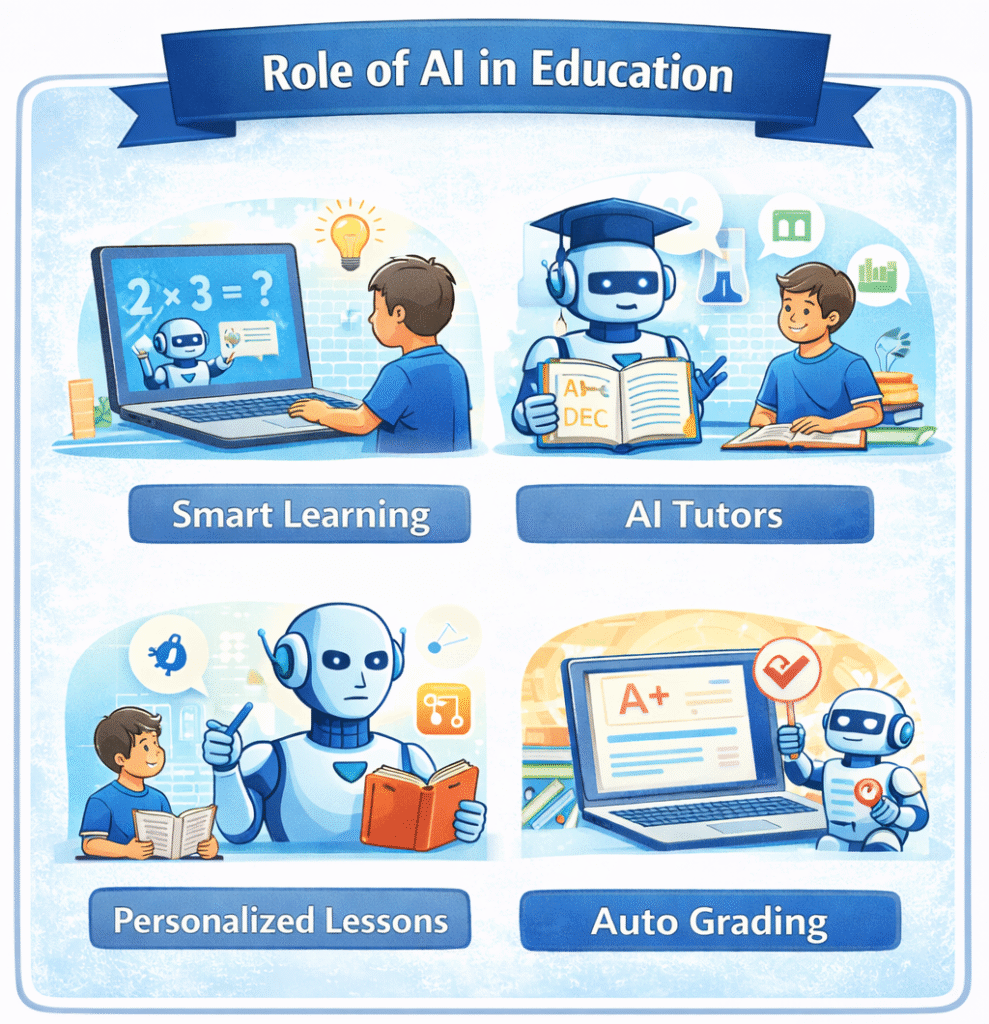
Intelligent Learning Platforms
AI-powered platforms can adapt lessons based on a student’s learning pace and understanding.
Virtual Tutors
AI tutors can assist students with homework, explain complex topics, and provide instant support.
Automated Assessment
Teachers can use AI tools to evaluate assignments and exams, saving time and improving grading efficiency.
These innovations are helping improve access to education and learning outcomes worldwide.
How Businesses Use Artificial Intelligence
Organizations are increasingly adopting AI to improve productivity and customer satisfaction.
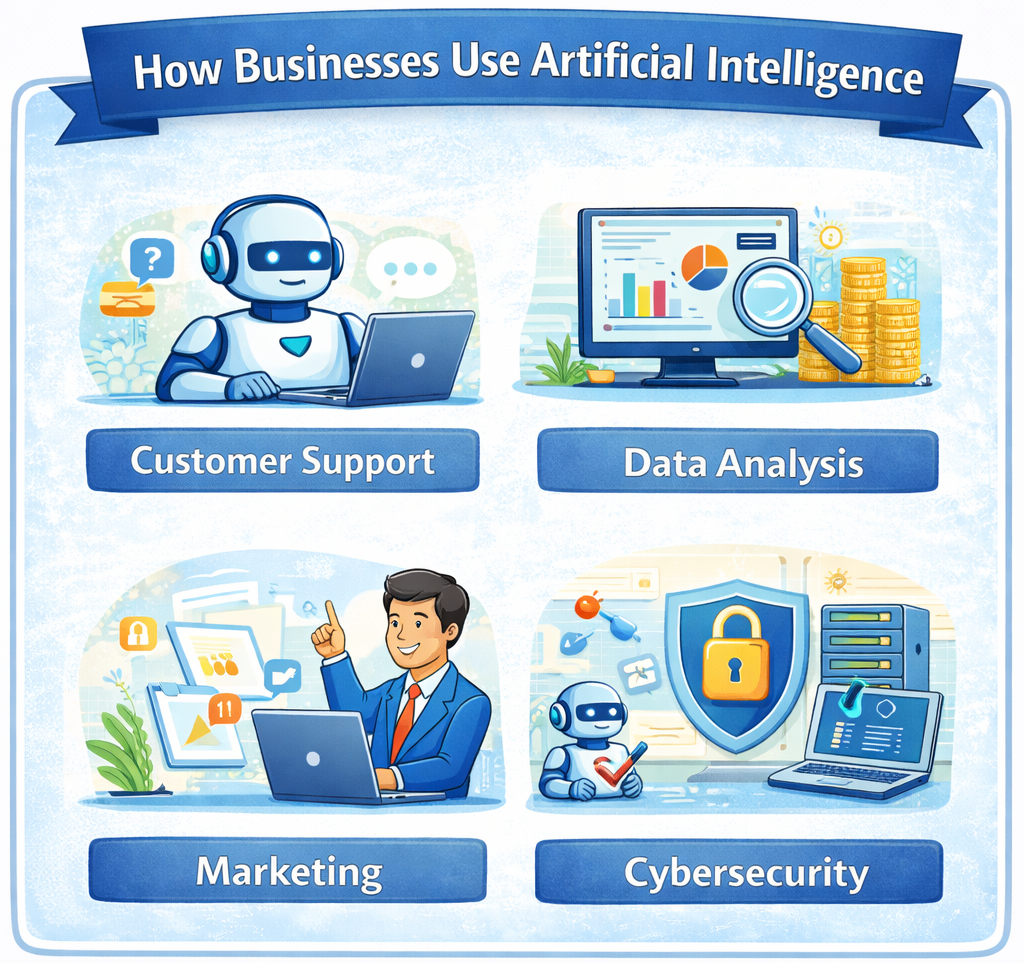
AI Chatbots for Customer Support
Many companies use chatbots to respond to customer questions quickly and efficiently.
Data Analysis and Insights
AI can process large datasets to identify market trends, consumer behavior, and business opportunities.
Marketing Automation
AI helps businesses create targeted marketing campaigns and optimize advertising strategies.
Using Artificial Intelligence in Daily Life
Artificial Intelligence is not limited to large organizations. Individuals can also use AI tools to improve their daily productivity and creativity.
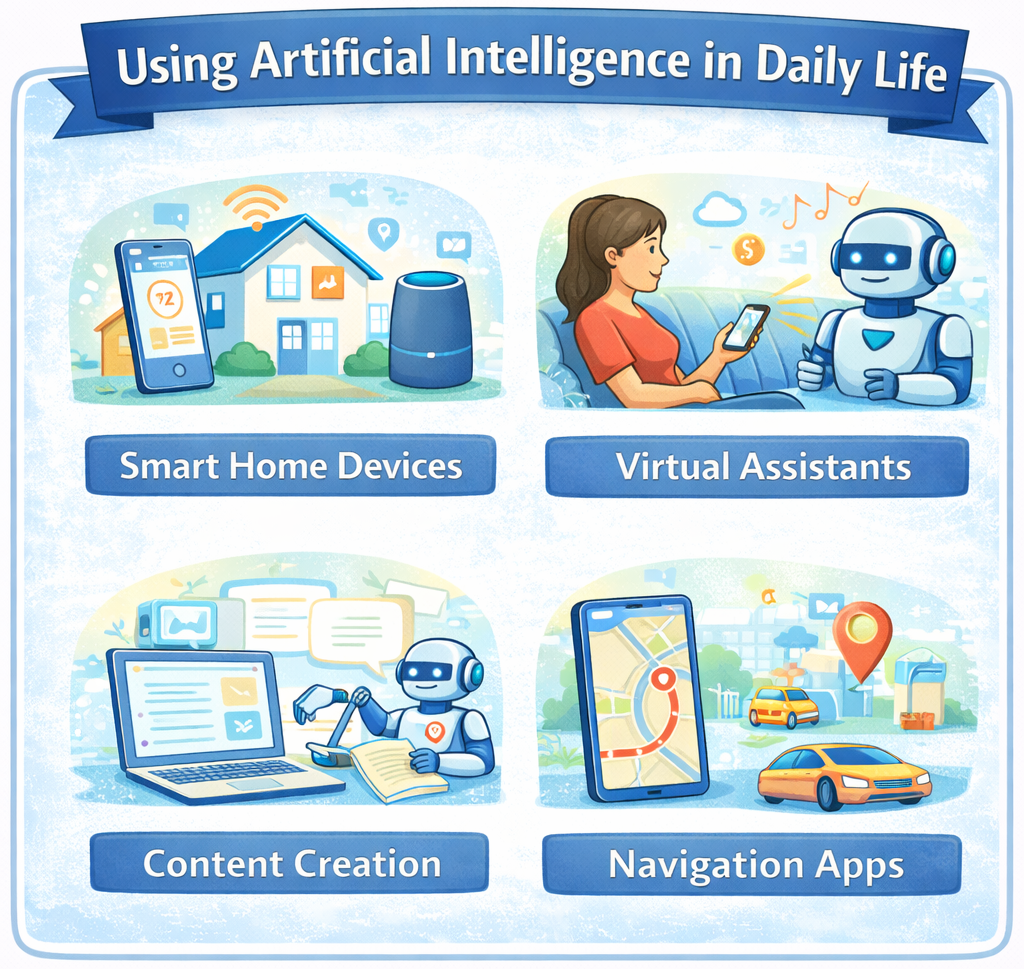
Content Creation
AI writing tools can help generate blog posts, articles, social media captions, and marketing content.
Graphic Design
AI-powered design tools can assist in creating logos, images, and visual content.
Learning and Research
Students and professionals can use AI tools to summarize information, understand difficult topics, and conduct research.
Productivity and Task Management
AI-based productivity apps can help organize schedules, manage tasks, and streamline daily workflows.
Common AI Technologies in Everyday Tools
Many technologies that people use daily already rely on Artificial Intelligence.
Examples include:
- Search engines that provide relevant results
- Voice assistants on smartphones
- Smart home devices that automate household tasks
- Streaming platforms that recommend content
- Navigation apps that suggest the fastest routes
These tools make everyday activities more convenient and efficient.
The Future of Artificial Intelligence
The future of AI looks highly promising. Experts believe it will continue to reshape industries and create new possibilities.
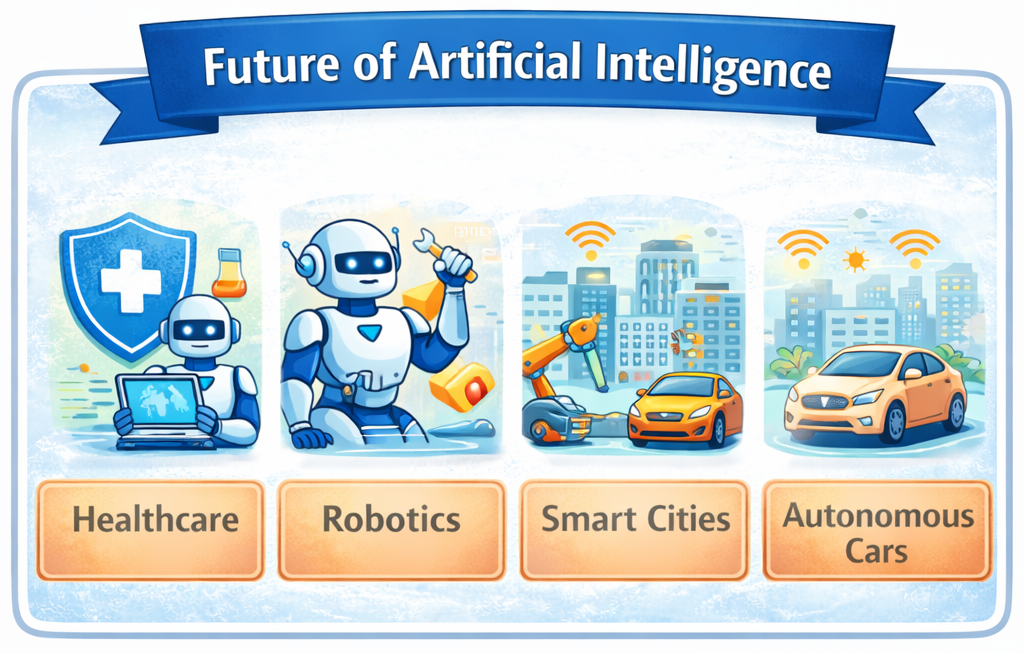
In the coming years, AI could contribute to advancements in areas such as:
- Healthcare and medical research
- Autonomous vehicles
- Robotics and automation
- Smart city infrastructure
- Scientific discovery
As technology advances, knowledge of AI will become an increasingly valuable skill.
Challenges and Concerns Related to AI
Despite its many advantages, Artificial Intelligence also raises certain concerns.
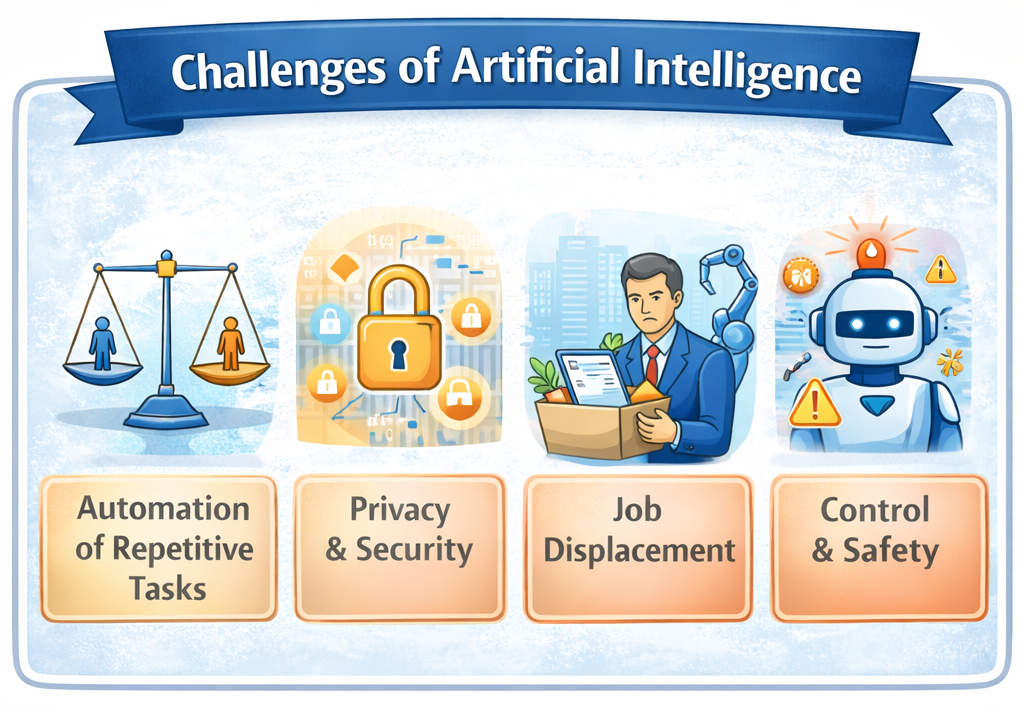
Data Privacy
AI systems often rely on large amounts of user data, which can create privacy and security issues.
Job Automation
Automation may replace some traditional jobs, requiring workers to learn new skills and adapt to technological changes.
Ethical Issues
Developers must ensure that AI systems are fair, transparent, and used responsibly.
Careful regulation and responsible innovation will be essential to addressing these challenges.
Conclusion
Artificial Intelligence is one of the most transformative technologies of the modern era. It enables machines to learn from data, automate tasks, and assist humans in solving complex problems.
AI is already influencing many aspects of life, including education, healthcare, business, and everyday technology. By learning how to use AI tools effectively, individuals can increase productivity, develop new skills, and prepare for the evolving digital world.
As AI continues to develop, people who understand and embrace this technology will be better positioned to succeed in the future digital economy.
Great content! Keep up the good work!
eussvrfrjeneeytpzfuhujfwgsjmfg